Understand Visually
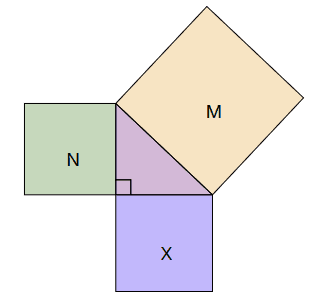
Starting with visuals not formulas clarifies what is happening in Pythagoras.

Tutors build stronger reasoning, problem-solving depth, and confidence so students are ready for more demanding high school math.
Grades 7-9 math often breaks down when an older skill is shaky, even if the current unit looks new on the surface.
Mobius tutors watch for those buried gaps and bring students back to the missing idea so new work starts making sense again. Weekly review also helps students return to important skills, hold onto what they learned, and build knowledge that stays available in later units.

High school math gets a lot harder, very quickly. If J hadn't done the work she did in Mobius Math, she would have been behind and lost ground very quickly. We're so glad she had the confidence and math knowledge to do very well as high school started.
Grades 7-9 math gets harder fast when earlier gaps keep resurfacing inside new units.
Tutoring begins with a clear baseline. We identify which foundations are steady and which ones still need work, from ratios and expressions to equations, geometry, functions, and data. In small-group tutoring, the tutor leads one live session while each student still works on math that matches current readiness. Challenge and pacing adjust to the student, not to the group. That starting point gives families a clearer picture of what to strengthen first, what can wait, and how support should begin. Instead of guessing, they get a tutoring plan built around the skills that will make current classwork easier and support stronger progress into high school math.

Grades 7-9 success depends on seeing how major ideas connect. Tutors help students strengthen the core domains that keep showing up in school math: ratios, expressions, equations, geometry, functions, and data. As those links get clearer, students can follow multi-step reasoning, move between representations, and use one idea inside another. The goal is math that holds together and keeps helping in future units.
Students model relationships with equations and graphs, then explain how changes in one quantity affect another.
Algebraic Expressions and Equations
Students simplify expressions, solve equations, and translate word problems into algebra they can solve confidently.
Exponents and Scientific Notation
Learners apply exponent rules and scientific notation in calculations that build speed, accuracy, and number sense.
Ratios, Rates, and Percent Relationships
Students solve proportional reasoning problems involving rates, percentages, and scale relationships in real contexts.
Pythagorean Theorem and Geometric Reasoning
Students apply geometric reasoning and the Pythagorean theorem to analyze shapes, distance, and unknown lengths.
Students analyze data, calculate probabilities, and interpret statistical results to support clear mathematical conclusions.
Functions and Pattern Relationships
Learners study function relationships through tables, rules, and graphs to connect patterns across representations.
Students simplify radicals and square roots, then use them accurately in algebraic and geometric problem solving.
Featured Skill
Students model relationships with equations and graphs, then explain how changes in one quantity affect another.
Sample preview unavailable for this skill.

Students do not just repeat one problem type until it feels familiar. They learn how to sort through mixed-topic questions, choose a starting point, and connect ideas that belong together.
That kind of practice matters in grades 7-9, when school math starts asking for more than recall. Students need to make decisions, not just follow a pattern they saw a minute earlier.
Tutors often begin with guided practice, then pull support back so students have to decide what to do next on their own.
Over time, that builds independence on longer, mixed-skill problems because students are not just following steps. They are learning how to start, stay organized, and keep working when the answer is not obvious right away.

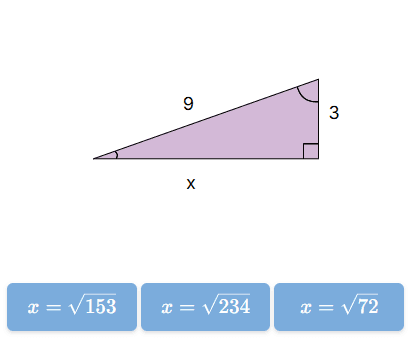
Scaffolding Example - Pythagoras
Students are able to understand what the Pythagorean theorem is doing, and then how to apply it. They build their own understanding step by step.
Starting with visuals not formulas clarifies what is happening in Pythagoras.
Understanding the role of the different sides is key to Pythagoras. This skill needs to be 100%.
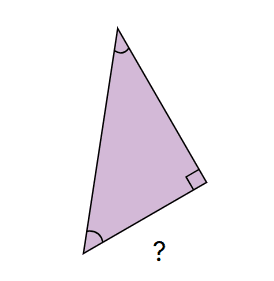
Solving with the sides labelled and the equation available.
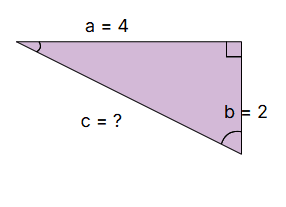
Understand how Pythagorean triples help solve many triangles.
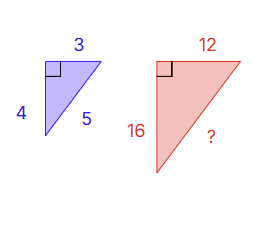
Solve triangles with the full Pythagoras skill set.

In grades 7-9, progress matters most when it carries forward. A student may need to firm up ratios, equations, or geometry first, then use those gains to handle algebra, functions, and more demanding multi-step questions with less strain.
Mobius tutoring starts from current readiness and builds from there. As foundations get steadier, students are ready for harder work on the platform, and tutors guide them through that next level so growth leads toward stronger high school math preparation.
Families often want to know whether tutoring is actually changing what a student can do from week to week. In grades 7-9, that progress usually shows up in clearer starts, fewer repeated mistakes, stronger follow-through on multi-step work, and more confidence when a question looks unfamiliar. Over time, those gains add up. Students hold onto important skills better, connect ideas across units more easily, and walk into high school math with more of the reasoning strength they will need there.

Grades 7-9 are a turning point.
This is when students need more than isolated unit help. They need math that holds together well enough to support algebra, geometry, functions, and the harder work waiting in high school. Mobius helps students move along that path step by step. If foundations are shaky, tutoring strengthens the earlier ideas that keep interrupting new learning. When readiness is established, the platform moves students into harder work and tutors guide them through it. Families get a clearer view of whether the priority is catching up, building depth, or preparing for more advanced high school math. Small-group tutoring and private math tutoring both support that growth, with the best format depending on how much in-class focus and scheduling flexibility a student needs.
Book a short evaluation call to review your child's current level, goals, and schedule. We can help you choose the best-fit format, whether that means private math tutoring or small-group tutoring. We also explain how Mobius makes progress visible with regular updates on covered skills, current strengths, and what to prioritize next.