Small Group
Math excellence through small group learning.
- Accessible price point
- Math excellence
Explore small group

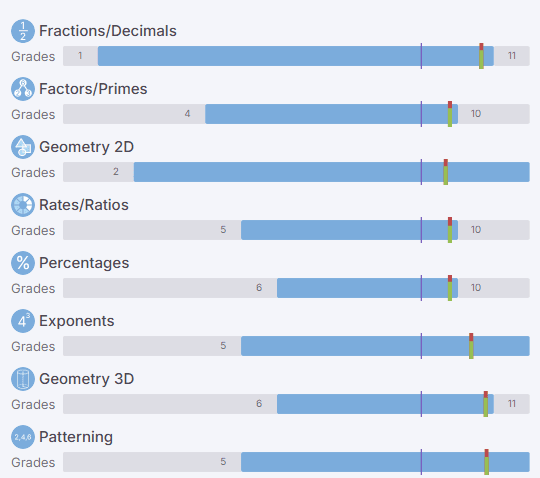
Mobius helps ambitious students build strong foundations, work at the right level, and get ready for demanding high-school math.
AP and IB students need more than extra practice. They need work that starts at the right level and keeps stretching their thinking.
Mobius uses the same core platform and tutor guidance in either format to match each student’s readiness, pace, and goals, so support stays personal while students build the math strength advanced courses demand.

AP and IB math asks students to think clearly under pressure, connect older skills to new ideas, and stay steady through harder units.
Mobius helps ambitious high-school students build that kind of strength. The platform adapts to each student’s level, and tutors provide real-time coaching, encouragement, and accountability as students work through challenging questions.
Families receive concise weekly updates that show what improved, where support is still needed, and which next focus area should guide the coming week of learning.
That gives parents practical learning evidence they can understand quickly, so decisions about pacing, reinforcement, and goals stay grounded in what the student is actually showing.
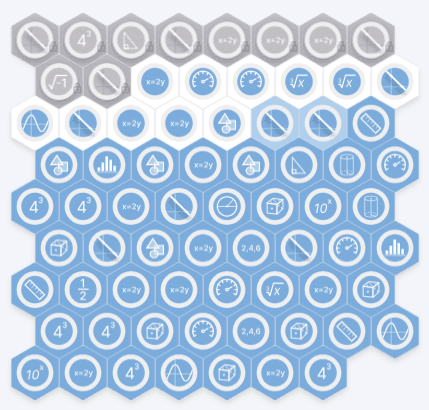
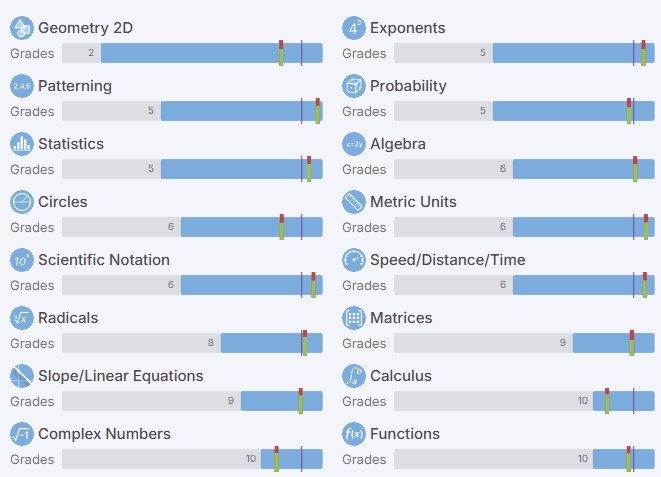
Students strengthen the core math domains that matter across high-school courses and support AP and IB readiness: algebra and equations, exponents and radical expressions, functions and graphs, trigonometry, probability and statistics, matrices, and introductory calculus. Mobius uses the platform to place each student at the right level in these areas, then tutors guide the work so students build stronger foundations, clearer reasoning, and better readiness for demanding class questions and assessments.
Advanced Algebra and Equation Solving
Students solve multi-step equations and inequalities while modeling complex relationships with algebra.
Functions and Graphical Analysis
Students analyze domain, range, transformations, and composition across graph and equation forms.
Exponents and Radical Expressions
Students apply exponent laws and simplify radical expressions with precision and confidence.
Students use trigonometric ratios, identities, and functions to solve advanced triangle and periodic problems.
Students model relationships with linear equations and solve systems graphically and algebraically.
Probability and Statistical Reasoning
Students interpret data, calculate probabilities, and communicate statistical conclusions clearly.
Students use matrices and matrix operations to represent and solve systems effectively.
Introductory Calculus Concepts
Students build understanding of limits, derivatives, and integrals for AP and IB readiness.
Featured Skill
Students solve multi-step equations and inequalities while modeling complex relationships with algebra.
Sample preview unavailable for this skill.

Strong AP and IB support should build independence, not turn tutoring into homework completion.
In Mobius sessions, students work through challenging questions themselves while the tutor coaches their reasoning, spots gaps, and helps them recover when they get stuck.
That approach builds the skills behind class assignments, quizzes, tests, and AP or IB assessments, so students leave with stronger understanding instead of short-term help only.
Many AP and IB students are aiming beyond the next test. They want the kind of math strength that opens doors to harder courses and future STEM options.
Mobius supports that long-term goal with demanding practice, live tutor guidance, and steady growth across the core skills advanced students need most.
Students build confidence for what is next while also becoming more prepared for the quizzes, tests, and major assessments already in front of them.


AP and IB students grow most when they are thinking, explaining, and working through hard questions themselves.
In Mobius sessions, tutors coach in real time, check understanding, and use the platform to make sure prerequisite skills are solid before moving deeper. As readiness becomes clear, the platform advances students into harder work and the tutor helps them succeed there step by step.
Families can choose small-group tutoring or private math tutoring based on the kind of support their student needs.
Small-group tutoring offers the same Mobius platform, individualized learning, and serious math instruction at a more accessible price point. Each student still works at an individual level inside the shared live session, with pacing and challenge adjusted to that student rather than to one group lesson path.
Private math tutoring is the best fit when a student needs more detailed attention on current classwork, wants to build the specific skills behind assignments and tests, or needs session times arranged directly with the tutor for maximum flexibility.

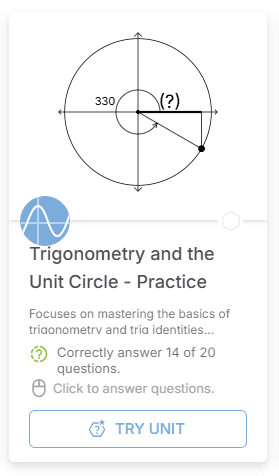
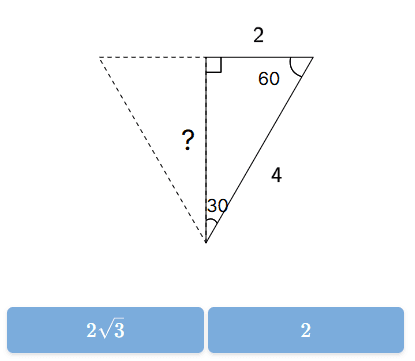
Scaffolding Example - Trigonometry
We build trigonometry knowledge and confidence from known ideas like Pythagoras and the geometry of circles
We start with familiar Pythagoras problems.
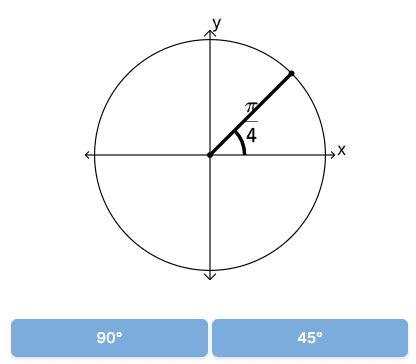
Understand the unit circle and how it relates to triangle geometry
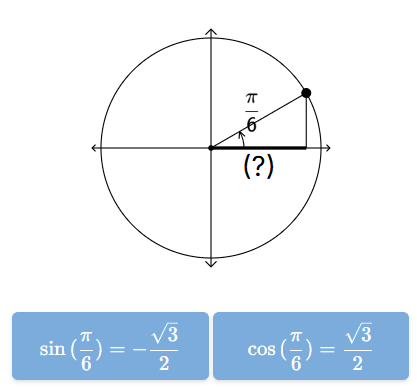
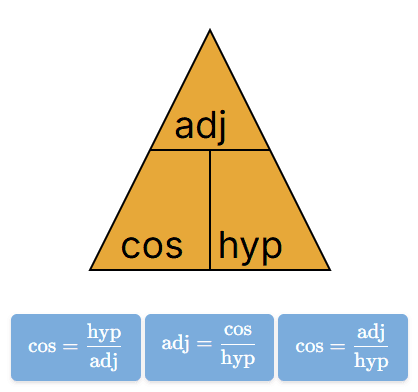
Make the ratios of sine, cosine, and tangent second nature.
Radians help understand trigonometry and the unit circle
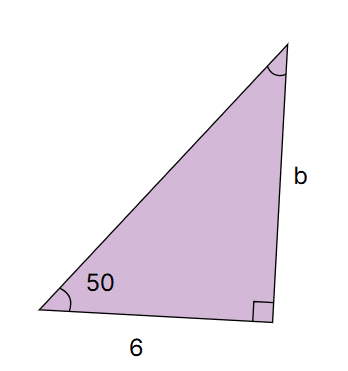
Bring together all skills to make sense of trigonometry.
Book a short evaluation call to review your child's current level, goals, and the best tutoring format for steady progress.